
March 6, 2026
By: Intellect
Africa stands at the brink of a trade transformation. The African Continental Free Trade Area (AfCFTA) is a game changer, promising to create the world’s largest free trade area by country count—connecting 1.3 billion people across 55 nations with a combined GDP of $3.4 trillion. Yet today, Africa accounts for only 2% of global trade, with intra-African trade at a mere 17%, compared to 59% in Asia and 68% in Europe. This presents both a challenge and an extraordinary opportunity.
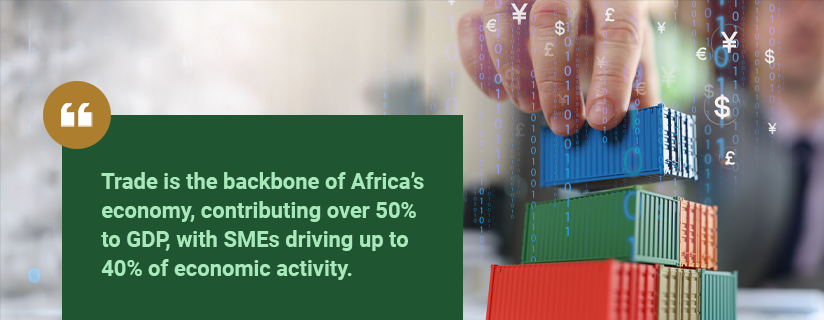
Trade is the backbone of Africa’s economy, contributing over 50% to GDP, with SMEs driving up to 40% of economic activity. However, a staggering $90 billion trade finance gap stifles growth, disproportionately affecting SMEs—the lifeblood of Africa’s employment sector.
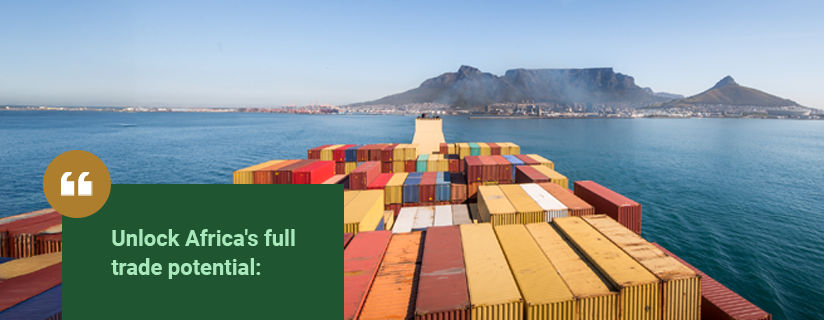
So, how do we unlock Africa’s full trade potential?
Digital Innovation & Trade Finance Transformation
Digital solutions will be pivotal in closing the trade finance gap. Trade banks must leverage automation, AI, and digital documents to streamline transactions, reduce risks, and enhance accessibility for SMEs. The future of trade finance in Africa hinges on tech-driven solutions that improve transparency, credit access, and efficiency.Supply Chain Finance as a Growth Catalyst
In regions like East Africa, where intra-regional trade is just 15%, SMEs are held back by limited working capital. Supply chain finance, particularly receivables purchase and loan-based solutions, can change the game—providing the liquidity businesses need to scale. Historically, SCF adoption has been low due to perceived risks, but today, technology-driven models are proving that these solutions are not just viable but essential for economic sustainability.Strategic Trade Corridors: Unlocking Regional Potential
Africa’s trade corridors are diverse, spanning North Africa’s Mediterranean trade routes, East Africa’s agricultural exports, West Africa’s commodity markets, and Southern Africa’s intra-regional trade hub. Each region presents unique opportunities for trade banks to optimize financing structures and unlock cross-border growth.South Africa: A Market in Transition
South Africa remains a key trade hub but faces challenges, including power outages and logistics constraints, impacting mining and manufacturing. However, digital trade finance solutions and SCF adoption can provide resilience, supporting businesses to navigate economic disruptions and drive long-term recovery.The Call to Action for Trade Banks & Investors
The opportunity lies in enhancing trade finance accessibility through:Digital integration across the ecosystem
Leveraging AI-driven risk assessment
Deploying supply chain finance solutions
Strengthening collaboration with fintechs and alternative lenders
By adopting these strategies, we can turn Africa’s trade finance gap into a growth engine—unlocking structural transformation, boosting SME contributions, and positioning Africa as a formidable player in global trade.
The future of African trade finance is not just about fixing the gaps—it’s about building a more connected, resilient, and thriving trade ecosystem.
What is the trade finance gap in Africa?
The trade finance gap in Africa is $90 billion, limiting SME growth and hindering intra-Africa trade, with only 17% of African trade being regional.
How does supply chain finance (SCF) benefit SMEs in Africa?
SCF provides liquidity to SMEs, enabling them to scale operations by offering financing options like receivables purchase, which increases business sustainability.
How can banks collaborate with fintechs to enhance trade finance access?
By integrating digital solutions and AI-driven risk assessments, banks and fintechs can make trade finance more accessible, reduce risks, and speed up financing for SMEs.
How can digital innovation improve trade finance in Africa?
Digital tools like AI, automation, and digital documentation streamline trade processes, reduce risk, and enhance transparency, making finance more accessible for SMEs.
Author:

SVP & Global Product Head eMACH.ai
Trade Finance Intellect Design Arena.