
July 14, 2026
By: Rajesh Saxena & Rami Roukoss
With a projected 20% CAGR, Islamic banking is attracting global interest for its stable, asset-backed model. But to capture this immense growth, institutions must move beyond manual compliance and embrace AI-driven, automated pool management.
IBS: Why is Islamic banking becoming more relevant across the globe now?
Rajesh Saxena: I think that’s a very good question and a very relevant question at this point in time. Islamic banking is the dominant pillar of the Islamic finance industry and roughly represents two-thirds of its total assets. Last year, in 2024, these assets reached about 4 trillion, and they are expected to increase by a CAGR of about 20%.
Some of the tailwinds that we are seeing, which are really helping Islamic banking, are the following:
- The first is the digital transformation with mobile banking, AI, and cloud platforms becoming prevalent. This is helping customers expand their access.
- The second key tailwind that we are seeing is really from an ethical finance appeal. The interest-free and the asset-backed model that we have in Islamic banking is increasingly attracting non-Muslim investors also.
- And third is really about resilience and stability perception. Since Islamic banking avoids speculative derivatives and requires real underlying assets, it is often seen now in today’s volatile world as more stable, and therefore these are the three tailwinds that we are seeing.
And just to reinforce my point, I’ll give you some proof points. For example, in the last 18 months, what we have seen is that 45 conventional banks have launched Islamic windows around the world. So there is demand being generated from an Islamic banking perspective. 15 new digital Islamic bank licenses have been issued worldwide. And for example, in Bahrain, AUB (Ahli United Bank) has converted from a conventional bank to a full-fledged Islamic bank. We are seeing this trend even in Africa, where in Djibouti, for example, we have the first Islamic bank, which has opened up to serve 14% of that population who are Muslim. So we are seeing a lot of forces coming together, and this is the right time we feel from an Islamic banking perspective.
IBS: What are the key challenges Islamic banks face in the current digital banking era?
Rajesh Saxena: I think that’s a very good question and a very relevant question because what we are seeing from a bank’s perspective, the product personalization, the ability of the banks to customize new products, and the time to market these new products are severely challenged because these have to follow Sharia compliance. We find that there is a lot of manual work required in calculation and accounting. Managing Islamic investment pools can be a very manual, error-prone process.
For example, unlike fixed interest, which is a simple formula in conventional banking, in Islamic banking returns have to be calculated based on the actual performances of the assets, and then you have to allocate these profits fairly across different pools, and this can get very complicated. I think also skills and knowledge of people—trained resources who understand these Sharia guardrails—are limited. A limited talent pool makes this even more difficult.
IBS: Now speaking of eMACH.ai, that is Intellect’s product, how is the eMACH.ai Islamic banking proposition different from the others in the market? How does it distinguish itself?
Rajesh Saxena: Sure, and I think it’s important to note that we are coming a little late in the market, and therefore we have this advantage that we had the ability to purpose-build our product to address these challenges—the challenges that I talked about in your earlier question about speed to market, composition, etc.
So we had that advantage. What we did was when we really went to design this product, we said we will make Sharia and AAOIFI compliance an integral part of the system and logic by design. So we built our platform around these principles. Therefore, this platform enforces the right structures, calculations, and flows from the very beginning. Most of our peers and our competitors actually started with a conventional banking platform, and they did some band-aids to make it Sharia-compliant. That’s why this makes it very difficult and rigid for them to maintain and change.
From our perspective, since we started with this design, our platform is really composable by design and has Sharia principles built as a fundamental principle. So this is a very significant advantage that we bring to the market versus our competitors or peers. For example, pool management which is composable, transparent, auditable, and fully automated. A fully automated profit calculation and distribution engine is built in as a key component of our platform.
IBS: Could you expand on pool management and why this is a critical feature for banks, also the role of AI in the process?
Rami Roukos: Well, when we speak about pool management, we are speaking about the base foundation and the fundamental engine which any Islamic bank in the market needs to operate. And when we speak about Islamic pool management, transparency has to be there to abide by Sharia principles and guidelines. This is why the eMACH.ai Islamic pool management has been built as a fundamental thing based on Sharia by design, and accordingly, for sure, on the AAOIFI regulations and compliant with the architecture of eMACH.ai.
Secondly, when we speak about pool management, we have the component of real-time monitoring and performance, which we have to provide to all the customers inside the bank, and this is also where automation of the profit calculation distribution has to be in place to give this kind of accuracy to the customer.
So it’s not only about automation of the processes. It’s about the confidence that you have to bring inside Islamic pool management and to provide to the customer whenever you are operating under this model. And this is where I believe AI, which is an embedded component inside our Islamic banking offering, will give more accuracy; it will give more transparency, especially whenever we are running a data-driven application inside the application.
And just to end on this part. AI will not replace the ethical or the religious framework of the Sharia board or the committee inside the bank. It will put additional power or strength on the application on how the banks should run the pool management or the Islamic pool management.
IBS: Which Islamic financing products are supported and how does the platform streamline their lifecycle?
Rajesh Saxena: Yeah. So let me start. I’ll just say that the platform that we are launching now covers the majority of our Islamic products. However, having said that, we also have a roadmap and we will ensure that we keep covering newer products, including trade finance and treasury.
Rami Roukos: As mentioned by Rajesh, we are looking at the full customer journey when it comes to Islamic banking, specifically from the Islamic core banking and the Islamic accounts. So whenever we are speaking about the Mudarabah or the Wadiah or the Wakala deposits from the liability side for any customer, then going to the second fundamental thing, the Islamic pool management, which we spoke a little bit about, and of course going to the Islamic financing by supporting the majority of the key Islamic products like Qard Hasan. So these are the most important pillars for any Islamic bank, and we also have a very clear roadmap which is coming into place to cover Islamic trade finance, Islamic Sukuk, and treasury and all of those aspects as well.
Rajesh Saxena: And if I can just add to what Rami said, what is really more important is how we manage the entire lifecycle. Right. So everything is connected in our platform from origination to approval to disbursement and servicing within a single configurable flow. And this really helps us and the banks to reduce fragmentation. It speeds up the processing and minimizes manual effort. So the value from a platform is just not about supporting the products, but it is about making the entire customer journey and the customer lifecycle efficient, scalable, and easy to manage.
Except from IBS Intelligence Podcast Ep 980 | A Cedar Consulting Unit
Author:
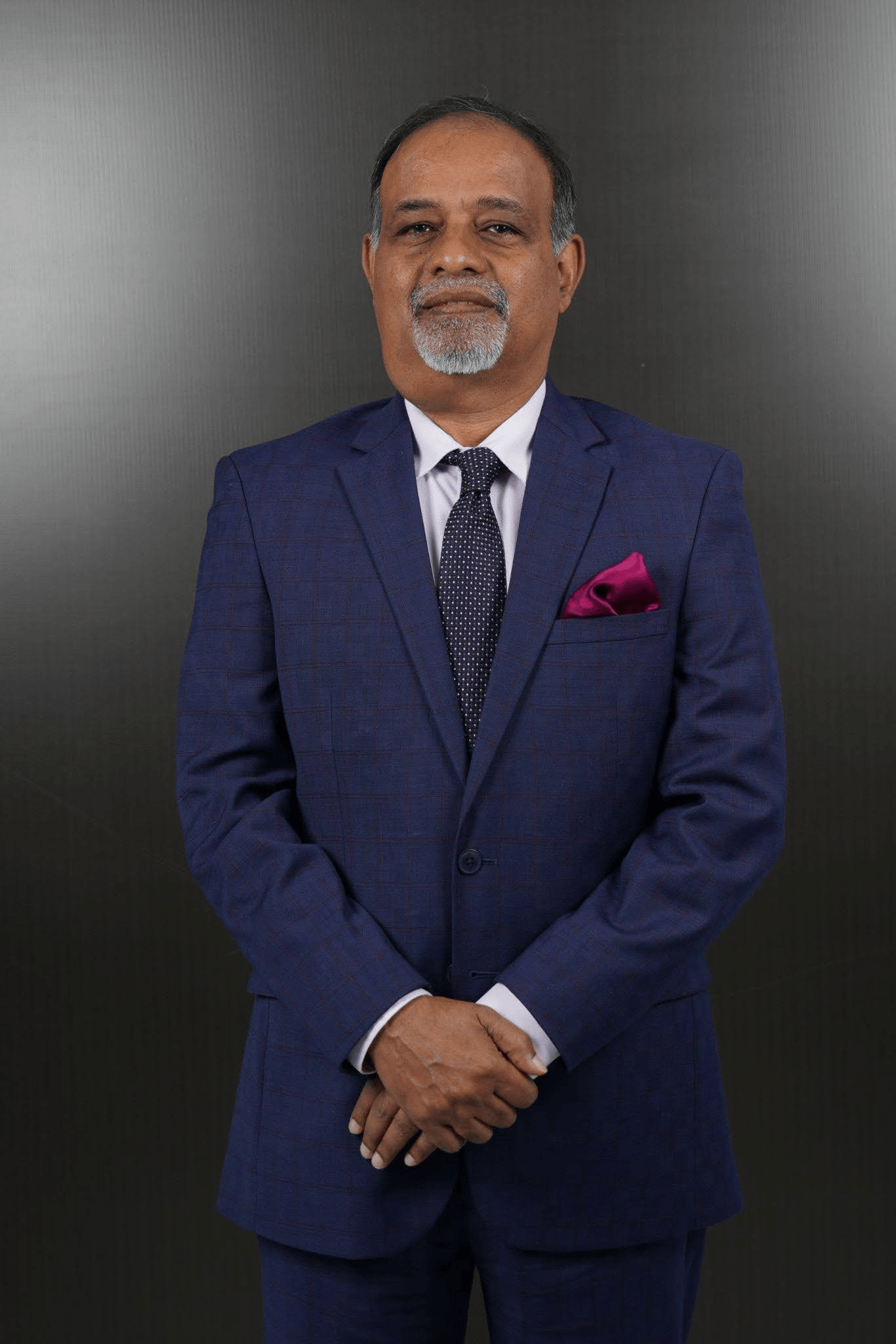
Rajesh Saxena,
CEO – Intellect Consumer Banking,
Intellect Design Arena
 Rami Roukoss,
Product Expert,
Intellect Design Arena